LabScribe Action Potentials Module

Analyze and quantify action potential recordings with LabScribe. This add-on module provides automated measurements, customizable cursors, and tools for identifying peaks, derivatives, and waveform characteristics.

SKU: LS-AP Category:

Compound Muscle Action Potentials

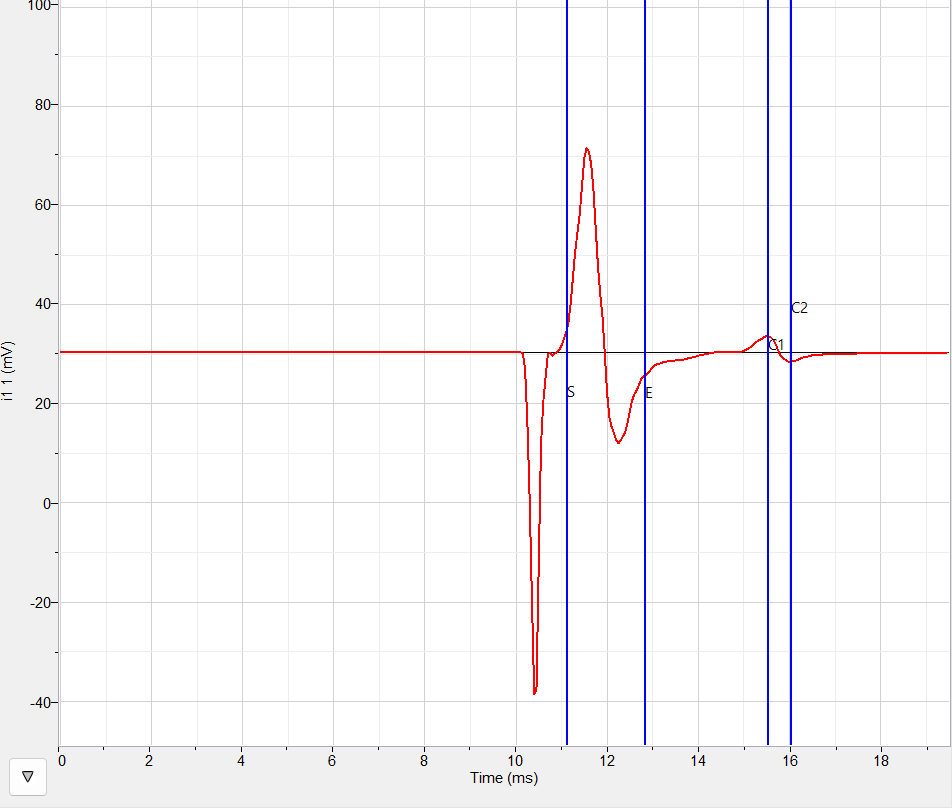
Use a Stimulus Channel to mark the beginning of the stimulus, identify the start and stop of the peak based on slope changes or where the line of maximum derivative intersects the baseline, and measure latency both to the start of the peak and to its maximum.

Calculations include:

  • Maximum: Maximum amplitude voltage for the selected action potential
  • Minimum: Minimum amplitude voltage for the selected action potential
  • Latency Start: Time from start of the cycle or Stimulus to the Peak Start
  • Latency Peak: Time from start of the cycle or Stimulus to the Peak Maximum
  • Pre Max dAdt: Maximum derivative of action potential before the peak
  • Pre Min dAdt: Minimum derivative of action potential before the peak
  • Post Max dAdt: Maximum derivative of action potential after the peak
  • Post Min dAdt: Minimum derivative of action potential after the peak
  • Rise Time: Time from PeakStart to Maximum
  • Minimum Time: Time from PeakStart to Minimum
  • Peak Stop: Time where the peak ends
  • Cycle Duration: Time from PeakStart to PeakStop
  • Area: Area under the curve from baseline to peak
  • Additional Cursors (C1,C2): Used for Hoffman Reflex (H-Wave) measurements

Cardiac Action Potentials

Calculations include:

  • Period: The time from the start of one action potential to the start of the next.
  • Heart rate, measured in beats per minute.
  • Maximum amplitude voltage for the selected action potential.
  • EDV: Voltage before the initial upswing of the action potential.
  • Maximum derivative of action potential.
  • Minimum derivative of action potential.
  • Plateau voltage of action potential.
  • Amplitude: Plto – EDV.
  • Recovery 1: The time, in milliseconds, from EDV to the point where the signal drops below the level corresponding to the % Recovery 1 level.
  • Recovery 2: The time, in milliseconds, from EDV to the point where the signal drops below the level corresponding to the % Recovery 1 level.
  • Recovery 3: The time, in milliseconds, from EDV to the point where the signal drops below the level corresponding to the % Recovery 1 level.
  • Rise Time: Time from EDV to Maximum.
  • Cycle Duration: Time from EDV to the point where the signal recovers to baseline.

Videos

Action Potentials Module

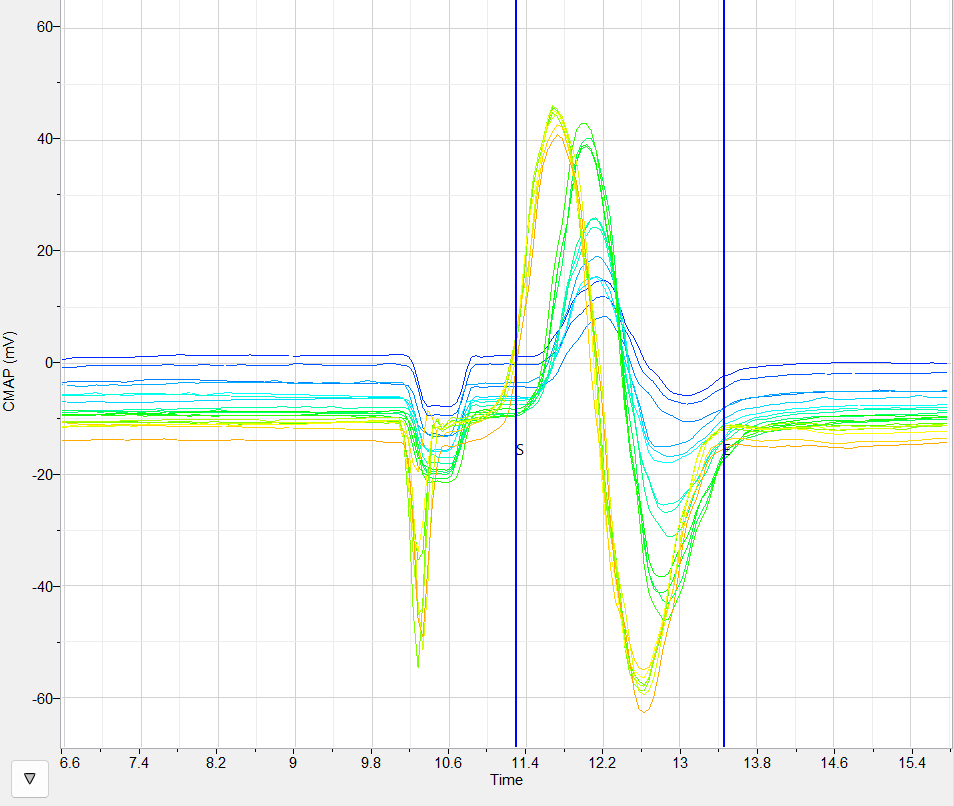
CMAP Overlay

Cardiac Action Potentials

Calculations include:

  • Period: The time from the start of one action potential to the start of the next.
  • Heart rate, measured in beats per minute.
  •  Maximum amplitude voltage for the selected action potential.
  • EDV: Voltage before the initial upswing of the action potential.
  • Maximum derivative of action potential.
  • Minimum derivative of action potential.
  • Plateau voltage of action potential.
  •  Amplitude: Plto – EDV.
  •  Recovery 1: The time, in milliseconds, from EDV to the point where the signal drops below the level corresponding to the % Recovery 1 level.
  • Recovery 2: The time, in milliseconds, from EDV to the point where the signal drops below the level corresponding to the % Recovery 1 level.
  • Recovery 3: The time, in milliseconds, from EDV to the point where the signal drops below the level corresponding to the % Recovery 1 level.
  • Rise Time: Time from EDV to Maximum.
  • Cycle Duration: Time from EDV to the point where the signal recovers to baseline.
Action Potentials

Compound Muscle Action Potentials

  • Use a Stimulus Channel to mark the beginning of the stimulus
  • Mark the start and stop of the peak based on slope change, or the point where the line of maximum derivative intersects the baseline
  • Measure the Latency to the start of the peak as well as to the Max.

Calculations include:

  • Maximum: Maximum amplitude voltage for the selected action potential.
  • Minimum: Minimum amplitude voltage for the selected action potential.
  • Latency Start : Time from start of the cycle or Stimulus to the Peak Start
  • Latency Peak : Time from start of the cycle or Stimulus to the Peak Maximum
  • Pre Max dAdt: Maximum derivative of action potential before the peak.
  • Pre Min dAdt: Minimum derivative of action potential before the peak.
  • Post Max dAdt: Maximum derivative of action potential after the peak.
  • Post Min dAdt: Minimum derivative of action potential after the peak.
  • Amplitude: Plto – PeakStartAmplitude.
  • Rise Time: Time from PeakStart to Maximum.
  • Minimum Time: Time from PeakStart to Minimum.
  • Peak Stop: Time where the peak ends.
  • Cycle Duration: Time from PeakStart to PeakStop
LabScribe Action Potential Module Calculations

Have Questions?

The iWorx team is here to help—whether you have a quick question or need hands-on support. Our technical specialists offer one-on-one assistance with setup, troubleshooting, and optimizing your system.

Design Your System

Choose the parameters you want to Measure

ECG/EKG
EMG : Number of Channels
Non-Invasive BP : Number of Channels
Flow : Number of Channels
Temperature: Number of Channels
Force: Number of Channels
Stimulation: Describe the type

Recover Password

We will contact you with your login info. 

iWorx Newsletter Signup

By subscribing, you agree with our Privacy Policy and provide consent to receive updates from our company.