
Table of Contents
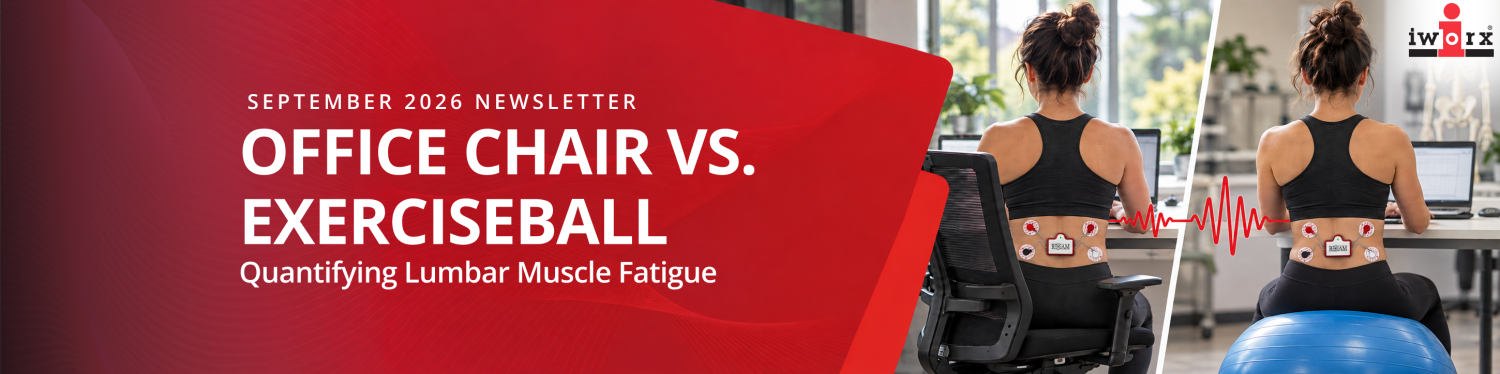
Quantifying Lumbar Muscle Fatigue: Office Chair vs. Exercise Ball
The debate over dynamic sitting has filled ergonomic literature for years: Does replacing a standard desk chair with an exercise ball actually activate core muscles to be beneficial for spinal health, or does it simply hasten lumbar fatigue?
Exercise Ball: Active Muscle Overwork
Sitting on an exercise ball forces dynamic sitting. Because there is no backrest or stable base, your core and lower back muscles must contract continuously to keep you upright and balanced.
- Fatigue: Active and muscular. It functions like holding a low-intensity wall-sit: the stabilizing muscles eventually burn through their local glycogen stores and suffer lactic acid buildup.
- Tipping Point: After 20 to 30 minutes, most people exhaust their stabilizing muscles.
- The Result: Once fatigued, your pelvis tilts backward (posterior pelvic tilt), causing your lower back to collapse into severe slouching (kyphosis). Without a backrest, this places pure mechanical strain on the intervertebral discs and lumbar ligaments.
Office Chair: Static Strain & Deactivation
A traditional task chair provides external mechanical support, meaning your back muscles do not need to work continuously to keep you upright. There is a backrest and potential lumbar support to keep you sitting properly.
- Fatigue: Static and postural. The backrest supports your upper body weight, allowing your core muscles to relax (this results in muscle inhibition).
- Tipping Point: Fatigue happens gradually over hours due to lack of movement rather than muscle exhaustion.
- The Result: Sustained sitting increases intradiscal pressure and compresses the intervertebral discs. Without active movement, fluid is pushed out of the spinal discs, leading to stiff, achy joints and tight lower back connective tissue.
It was once thought that swapping out a desk chair for an exercise ball was a way to continuously strengthen your core while working. However, long-term studies have shown that an exercise ball acts as a beneficial piece of workout equipment, not as a full-time chair substitute. For long workdays, an adjustable office chair with firm lumbar support provides the passive structure needed to prevent both muscular exhaustion and disc strain. Getting up from long hours of sitting in a chair and moving to an exercise ball to help strengthen your core is a good way to keep your back healthy.
Using the wireless iWorx ROAM system, educators and researchers can quantify back muscle activity in real time, moving beyond subjective comfort scores to distinct biological data.
Web Links: