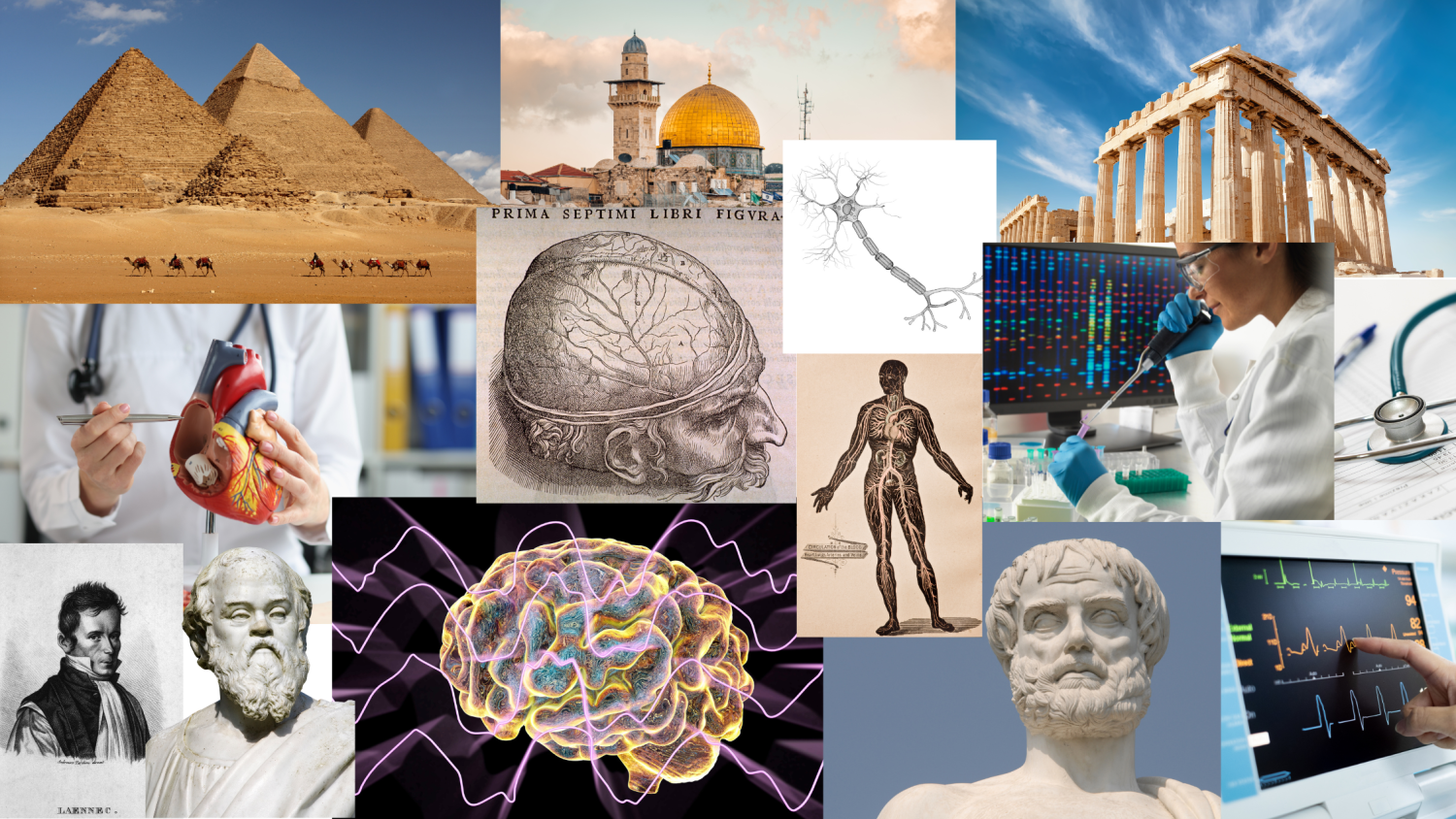
Physiology, the study of the functions and mechanisms of living organisms, is one of the most fundamental fields of biological science. It seeks to understand how organisms—from single-celled bacteria to complex human beings—maintain homeostasis, respond to environmental stimuli, and perform vital functions. Over the centuries, physiology has grown from philosophical musings about life’s processes to an evidence-based, experimental discipline that underpins modern medicine, health science, and many other biological fields.
In this article, we will explore the history of physiology, tracing its origins from ancient civilizations through to its development into a rigorous scientific discipline in the 19th and 20th centuries. Along the way, we will delve into the major discoveries, key figures, and technological advances that have shaped our understanding of life’s processes.
The origins of physiology are deeply intertwined with the early history of medicine and philosophy. Ancient cultures such as the Egyptians, Greeks, and Indians began formulating ideas about the nature of the human body and its functions. These early theories were often intertwined with religious and philosophical beliefs rather than empirical observation, but they laid the groundwork for the systematic study of life processes.
The ancient Egyptians were among the earliest to attempt to understand the human body. Although they didn’t possess the scientific tools we use today, their knowledge of anatomy and basic physiological processes was advanced for their time. Egyptian medicine was rooted in practical applications, especially related to mummification, which involved preserving bodies and observing their structure. This practice likely led to early anatomical studies and an understanding of organ systems, such as the cardiovascular and digestive systems.
The ancient Egyptian physician Imhotep (c. 2650–2600 BCE) is often considered one of the first physicians in history. He was known for his expertise in anatomy and is credited with pioneering methods of medical treatment, although his ideas about the function of organs and the circulation of blood were rudimentary compared to modern science.
Ancient Greek thinkers like Hippocrates, Aristotle, and Galen made significant contributions to early physiological thought. Hippocrates (c. 460–370 BCE), often called the “Father of Medicine,” introduced the idea that disease was caused by natural factors rather than divine punishment. He emphasized observation and patient care, laying the foundation for a more empirical approach to medicine.
Hippocrates also proposed the theory of the four humors (blood, phlegm, yellow bile, and black bile), which he believed controlled bodily functions and health. Although this theory was later proven wrong, it influenced medical thinking for centuries and was central to the understanding of bodily balance and health.
Aristotle (384–322 BCE) made critical contributions to biology and physiology through his detailed observations of animal dissections. In his work Historia Animalium (“History of Animals”), Aristotle categorized different species based on their anatomy and observed the functions of organs, contributing to early ideas about how body systems work.
The Roman physician Galen (c. 130–200 CE) was the most influential figure in physiology and medicine for over a millennium. He built on the work of earlier Greek thinkers and conducted extensive anatomical dissections on animals, particularly monkeys and pigs. Galen’s findings on the circulatory system, the role of the brain in controlling bodily functions, and the functions of organs like the liver and kidneys became central to medical knowledge for centuries.
However, Galen’s conclusions were often based on animal dissection, which led to inaccuracies when applied to human physiology. Despite these shortcomings, his theories persisted in medical practice for over 1,400 years, influencing both Western and Islamic medical traditions.
Following the fall of the Western Roman Empire in the 5th century, much of the scientific and medical knowledge of the ancient world was preserved and expanded upon by scholars in the Byzantine Empire and later in the Islamic world. During the Middle Ages, European medical thought was dominated by the teachings of Galen, but Islamic scholars made substantial advances in physiology and medicine.
During the Islamic Golden Age (8th to 14th centuries), scholars in the Middle East and North Africa made significant contributions to the study of the human body. Physicians like Avicenna (Ibn Sina) and Al-Razi (Rhazes) built on the knowledge of Galen and Hippocrates, but they also introduced new concepts based on their own observations and experiments.
Avicenna (c. 980–1037 CE) is perhaps the most well-known Islamic physician. His Canon of Medicine (1025 CE) became the authoritative medical text in both the Islamic world and Europe for centuries. The book covered a wide range of topics, including anatomy, physiology, and pharmacology, and laid the foundation for more advanced scientific exploration in the Renaissance.
Al-Razi (c. 865–925 CE) is considered one of the founders of experimental medicine. He was one of the first to distinguish between different diseases and to study their physiological effects in a more systematic way. His work on the pathophysiology of diseases such as smallpox and measles was groundbreaking for its time.
The texts of Greek and Roman physicians, along with the works of Islamic scholars, were gradually transmitted to Europe through translations into Latin during the 12th and 13th centuries. This transfer of knowledge was facilitated by scholars in Spain, particularly at the famed library of Cordoba, where works by Avicenna, Galen, and other thinkers were preserved.
In Europe, the Church played a crucial role in preserving medical knowledge. Monastic libraries held many of the classical texts, and monks often served as the primary medical practitioners. However, medical practice during this period was still largely theoretical, with little emphasis on experimentation or dissection of the human body.
The Renaissance (14th to 17th centuries) marked a dramatic shift in European intellectual history. During this period, there was a renewed interest in the classics, an explosion of artistic and scientific inquiry, and a growing emphasis on empirical observation. It was in this context that the study of physiology began to transition from philosophical speculation to an experimental science.
The Belgian physician Andreas Vesalius (1514–1564) is often credited as the “father of modern anatomy.” Vesalius broke with the tradition of relying solely on Galen’s work and conducted his own dissections of human cadavers. His groundbreaking book, De humani corporis fabrica (1543), provided the first accurate, detailed anatomical drawings of the human body. Vesalius demonstrated that many of Galen’s descriptions of human anatomy were incorrect, particularly concerning the structure of the heart, the liver, and the brain.
Vesalius’s work laid the foundation for a more accurate understanding of human physiology. His emphasis on direct observation and dissection set the stage for the scientific method to become central to the study of medicine and biology.
Another key figure in the development of physiology during the Renaissance was the English physician William Harvey (1578–1657), who made a revolutionary discovery about the circulatory system. In his seminal work, De Motu Cordis (1628), Harvey described the circulatory system in detail and demonstrated that the heart acted as a pump, circulating blood throughout the body. This discovery refuted the long-standing belief, based on Galen’s ideas, that blood was produced in the liver and consumed by the body.
Harvey’s work was pivotal in establishing the concept of circulation as the central mechanism for transporting nutrients, gases, and waste products throughout the body. His discoveries provided critical insight into how the cardiovascular system operates and laid the groundwork for future research in circulatory physiology.
The 18th and 19th centuries saw the establishment of physiology as a distinct scientific discipline. Pioneers in anatomy, chemistry, and physics contributed to a growing understanding of the body’s processes, and experimental methods became increasingly important.
In the 18th century, scientists began using controlled experiments to study the function of organs and systems in the body. The use of the microscope allowed researchers to explore cellular structures and functions in greater detail. This period also saw advances in chemistry, which helped to explain many physiological processes, such as respiration and digestion, in terms of chemical reactions.
Luigi Galvani (1737–1798) was an Italian physician and physiologist who made a groundbreaking discovery in the study of nerve function. In the late 18th century, Galvani conducted experiments in which he applied electrical stimuli to the muscles of frogs, causing them to twitch. This phenomenon, known as “animal electricity,” provided early evidence of the electrical nature of nerve impulses and helped lay the foundation for the field of neurophysiology.
Galvani’s work was expanded upon by his nephew, Giovanni Aldini, and later by scientists like Alessandro Volta, who developed the first electric battery. The discovery of bioelectricity was a critical step in understanding the mechanisms of nerve function and muscle contraction.
By the 19th century, physiology had emerged as a distinct scientific discipline, with researchers focusing on specific organ systems and their functions. Some key figures of this period include:
In the 19th century, advances in medical technology, such as the stethoscope (invented by René Laennec in 1816) and the microscope, allowed physicians and physiologists to observe and measure bodily functions with unprecedented precision. The development of tools like the sphygmomanometer for measuring blood pressure and the electrocardiograph for monitoring heart function revolutionized the study and practice of medicine.
The 20th century saw an explosion of discoveries in physiology, many of which were driven by advances in technology, such as the development of molecular biology, genetics, and imaging techniques. The understanding of the human body reached unprecedented levels of detail, and physiological research became increasingly interdisciplinary, incorporating elements of biochemistry, physics, and computational modeling.
Some of the most significant physiological discoveries of the 20th century include:
Today, physiology is a dynamic field that continues to evolve with advancements in technology and interdisciplinary research. The study of human physiology now integrates molecular biology, genomics, and systems biology to understand complex interactions between genes, cells, organs, and organisms. This has paved the way for personalized medicine, advanced therapies for chronic diseases, and a deeper understanding of the biological basis of health and disease.
The history of physiology is a story of discovery, from early anatomical observations in ancient civilizations to the sophisticated, experimental science we know today. The field has evolved over thousands of years, shaped by philosophical speculation, groundbreaking experiments, and technological advances. As we continue to deepen our understanding of how living organisms function, physiology will remain central to improving human health, advancing medicine, and unraveling the mysteries of life itself.
Reach out to us; we’d love to help contribute to your teaching or research success.
We will contact you with your login info.
By subscribing, you agree with our Privacy Policy and provide consent to receive updates from our company.